-
Photo by Mitch Teemley Why do we need to believe in him? One night many years ago, I ran into a young woman “witnessing” on a street corner. 248 more…
Why Do We Need to Believe in Him? -
Pip: Pastor Goforth is preaching out of Luke 18, where Jesus meets a man who has done everything right and still walks away sad — which, honestly, is a mood.
Mara: This episode follows that encounter into some real territory: what it costs to follow Jesus, what it means to actually leave something behind, and why children might understand faith better than rulers do.
Pip: Let’s start with the wealth we carry and what Jesus asks us to do with it.
Where Is Your Wealth? Lay it Down
Mara: Luke 18 sets up a contrast that drives this whole post — children coming to Jesus with nothing, and then a wealthy young ruler arriving with a very specific question: what must I do to inherit eternal life?
Pip: And the post points out that “what must I do” is already the wrong question. Children don’t come with a to-do list. They come with excitement, expectation, faith, and humility.
Mara: Jesus meets the ruler where he is, runs through the law, and then in verse 22 delivers the line the post anchors everything on: “you still lack one thing — sell all you have… then come follow me.”
Pip: That word “lack” is leipo in the Greek — to fall short. The ruler had kept the law and still came up short, not because of what he hadn’t done, but because of what he wouldn’t release.
Mara: And the post broadens that out deliberately. Wealth here isn’t only money. It’s property, possessions, competence, confidence — anything we hold onto that makes it harder to come like a child. The post puts it plainly: it’s easier for the down-and-out to come than the up-and-out.
Pip: Which is a quietly uncomfortable observation, because most people reading a sermon blog are not the down-and-out.
Mara: The post then works through what leaving everything actually requires. Peter says, look, we left what we had — and the post notices he’s almost keeping score. As long as you’re tracking what you gave up, you haven’t really left it.
Pip: There’s a detail from John 21 here worth catching: after the resurrection, Peter and the disciples went back to their boats. Jesus showed up and gave them a fresh call — and that, the post argues, is when they truly left everything, all the way to death.
Mara: The post closes with a disarming move. The disciples didn’t understand where following Jesus would lead — the betrayal, the death, the rising. And the post imagines Jesus responding: “What did you understand?” “You said follow me.” “Then do that, and leave the rest to me.”
Pip: Excited, expectant, humble, faith-filled — coming like a child is the whole posture, not just a metaphor for the young.
Mara: The question underneath all of this is what we’re actually gripping when we say we’re following — and whether we’ve scored it or surrendered it.
Pip: Come back next time. There’s more Luke 18 ahead, and Jericho is just around the corner.
-
Luke 18, Jesus has a several famous encounters in this and chapter 19. But I started at what we call the “Rich Young Ruler”.
This story is in the midst of the ministry years. After this, he heals a blind man, then he enters Jericho and meets that diminutive man named Zacchaeus.
Before this, Jesus tells a parable showing that if we persist in prayer, we can know that God grants justice. Then in v9 he told a parable to some who “trusted in themselves” and took pride in their own goodness while looking down on others who didn’t live up to their self-created standards.

Then Jesus encouraged children coming to him. “Let the little children come to me because the kingdom belongs to such as these.” He takes it a step further to say that whoever does not receive the kingdom like a little child will never enter it.
In the midst of that, a young man and a ruler, asked, Good teacher, what must I do to inherit eternal life?
Now, if he was a “ruler”, then he wasn’t too “young”, as that’s a relative term. He wasn’t aged, but was old enough for authority, and asks, what must I do?. That of course is the wrong question.
How do little children come?
- With Excitement
- With Expectation
- With Faith
- With Openness
- With Humility
Jesus said, if you want a “to do list” – you have the law. “I have kept all these from my youth”. We all have a list of what we’ve done or tried to do… and yet, we ALL come up short of the glory of God.
Then v22 When he (Jesus) heard this, he told him, ‘you still lack one thing’ (leipo = fall short) sell all you have… then come follow me.
It is not what we DO, but who we follow and how.
If you read on, the disciples say, this is hard so the disciples wonder, then who can be saved?
- Jesuus answers, what is impossible with man is possible for God.
Yes, it is hard to follow Jesus, particularly when we have “wealth”, whether that is money, property, possessions, competence, or confidence – those things make it hard to follow Christ. I’ve often said it’s easier for the “down-and-out” to come than the “up-and-out”. They often have the hardest time coming to the Lord.

Jesus flips those two words. The root word for ability is dynamai (looks like dynamite) and means to be able. The word then “possible” comes from that root and is dynatos – possible/powerful. Yet if you add “a” to the front, adynatos = impossible. God DOES flip the script from impossible to possible.
- This one thing you lack… you are holding on to your own competency…
- Sell it all – Lay It Down… and
- Come Follow Me
That man went away sad… why? Because he wasn’t willing to comes as a child.
Children, generally, don’t have wealth, don’t have influence, but they come with excitement, expectation, faith, and humility, desiring to be touched by God.
Peter said, “Look, we have left what we had and followed you.” You can almost see him making a “check mark” in the sky.
Yes, Luke 5:11 they pulled up their boats on short, left everything, and followed him.
But when we “Leave Everything…” – LEAVE IT. Let it go. Stop Keeping score. Don’t expect reimbursement. As long as I keep score, I haven’t “LEFT” it. Jesus said to the man, “sell it all”… then “give away the profit”.
Interestingly, in John 21, after the resurrection, Peter and the disciples still had access to their boats and went back to fishing – but if you read it, Jesus came them a fresh call and commission – Then they TRULY Left Everything and gave the fullness of their lives to him, to the point of death.
Jesus tells them to rest assured that no one who has left everything – people, possessions, purposes, priorities, posture, anything – will be repaid much more now and in eternity.
Then he tells them WHERE following him will lead. It will result in the fulfillment of Psalm 22 and Isaiah 53, and so much more, as he will be… handed over… mocked… insulted… spit on… flogged… killed… but will rise on the third day…
v34 they understood non of these things… they did not grasp what was said…
I think sometimes, we don’t understand, so we do not go.
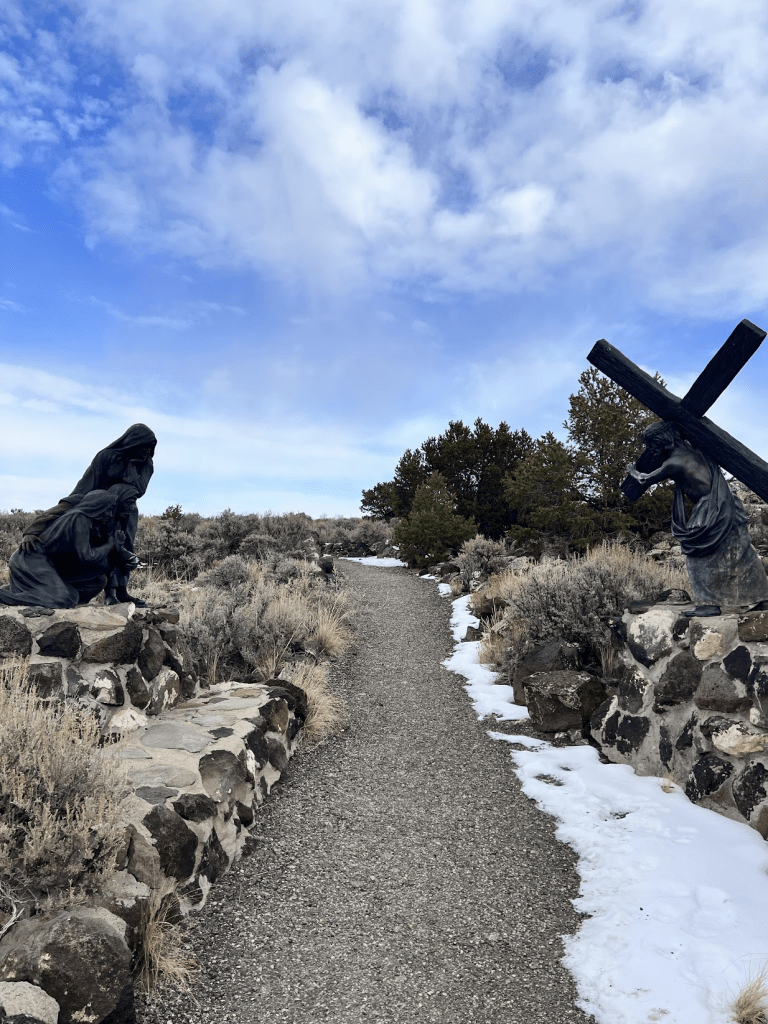
“I don’t understand this, Lord.”
I can hear Jesus saying, “What DID you understand?”
“Well Lord, you said, ‘follow me’.
“So then, DO THAT, and leave the rest up to me.”
Here I come Lord… excited, expectant, humble, faith filled, following…
Touch me Lord.
-
Peter writes in 2 Peter 1:1-2 to those who have received a faith equal to ours through the righteousness of our God and Savior Jesus Christ 2 May grace and peace be multiplied to you through the knowledge of God…
Peter, though a “first follower” and leader, an Apostle chosen by God in Christ, did not think he had something that others could not have, but recognized that all can receive equal grace, equal promises fulfilled, because it’s all about, from, and through Jesus to all who believe.
So, may grace be multiplied to you…
Then he teaches such powerful things about growth in Christ in chapters one and two. And as he must have been aware that his days were numbered by both age and the attack of evil which would take his life as a martyr in the faith, he shifts to understanding that our days are numbered…
Since 3:11 these things are to be dissolved… so we should be holy and godly 12 as you wait…

If you live 5, 10, or 100 years, a “day” for the Lord… v8 is like 1000 years for us. So my life, over 60 years, has only been like about 90 minutes by the Lord’s watch. (if you know watches… I’m sure the Lord’s Watch must be a “Doxa” that’s why I have one)
So, if MY life has only been about 90 minutes… it’s only been about “two days” since Peter wrote these words, and then “any day now” he could come… or maybe in “5 or 10 or 90 minutes”.
With that understanding, focus on the right things, while you wait
v14 while you wait for these things…
- Be found without spot… at peace
- Recognize delay = salvation for someone else
- be on your guard… not led away by error… which can move us away from truth and purpose
Then 3:18
- Grow in Grace and Knowledge of our Lord and Savior Jesus Christ
Oh my, sadly I know people who “seem” to be growing in Knowledge” but don’t seem to be growing in Grace – charis = grace, kindness, blessing, concession, favor.
I won’t make more of it than to say – Grow IN – axiano = to make grow, cause growth, full grown. It is a verb in the Present, Active, Imperative tense. That means “Right Now, you MUST cause to grow toward full growth and maturity.”
So, we don’t grow TO grace, that is a gift of God, but we are to grow IN Grace. We don’t achieve grace, but we do need to grow IN it.
I was born to my family, but then IN my family I did need to grow up to be who we are, love what we love, do what we do.
We raised our sons that way, “this is who we are, grow into that, or do not do this or that because that’s not who we are, so put that aside.”
Knowing that any day now Jesus is coming again, I want to grow up to be more like him today in grace, and know who he is, what he expects, what he does, and what he doesn’t do – then seek to be that.
In Grace – Grow to be Gracious, Grace Filled, Grace Giving, Grace revealing…
… So that I become more Special? Famous?… NO
3:18 But grow in the grace and knowledge of our Lord and Savior Jesus Christ – To HIM be the Glory, both now and to the Day of Eternity
Grow in Grace to Glorify Jesus, Make His Name Great, Make Him Famous, Make Him Glorious
-
Pip: There is a particular kind of sermon note that starts with a king dying and ends with the cosmos, and Pastor Goforth has written one of those.
Mara: This episode follows a single extended reflection on Isaiah 6 — the vision, the confession, the call — and how a moment of personal grief becomes the doorway to encountering God.
Pip: Let's get into it.
I Saw The Lord — Isaiah 6 and the Shape of Encounter
Mara: The post opens with a disarming admission: most of us will never see God with our eyes or hear his voice with our ears, and the question it sits with is what it actually looks like to "see the Lord" through Scripture and Spirit.
Pip: And the framework offered is five words — Posture, Preparation, Provision, Persistence, Presence — which sounds like a conference handout until you realize the post is using them to trace something genuinely personal.
Mara: The anchor passage is Isaiah 6, and the post sets it up through the detail most readers skip. Isaiah and King Uzziah were likely related — uncle or cousin — and Uzziah reigned for fifty-two years before a catastrophic fall: he attempted a priestly sacrifice forbidden to kings, and God struck him with leprosy. His final days were spent, as the post puts it, "in separation, disease, and disgrace."
Pip: So when Isaiah says "in the year that King Uzziah died," he is not giving us a timestamp. He is telling us he was grieving.
Mara: That's exactly the point the post makes. It notes the phrase is "in the year" — not the day, not the week — because loss takes time. Isaiah came to the temple humbled, and what he found there is the famous vision: the Lord seated high and lifted up, seraphim calling out, the room shaking.
Pip: And his first response is not awe. It is collapse.
Mara: The post quotes directly: "Woe is me… I am ruined." And then the confession — "I am a man of unclean lips, among a people of unclean lips." The post wonders honestly whether those unclean lips had been asking hard, accusatory questions during the year of grief.
Pip: Which is where the post gets genuinely vulnerable — there is a story about losing a close friend, sitting in an office, and sensing a quiet question: are you going to figure this out? The answer was no, and the pivot that followed was an invitation simply to worship alongside the friend who was already doing exactly that.
Mara: The sequence the post traces is deliberate: see the Lord, then see yourself, then confess — and only then does the voice come. "Then I heard the Voice of the Lord… Who will go for us? I said, Here I am, send me." The post reads that progression into Psalms 121 through 124 as well, a chain of lifted eyes and arriving help.
Pip: Look up, look in, listen, respond — that is the post's closing line, and it earns it.
Mara: The through-line here is that encounter with God tends to move through grief and honesty before it arrives at commission.
Pip: Which means "Here I am, send me" is not a brave opening line. It is what comes out the other side of something harder.
-
Most of us will never “see” the Lord with eyes or audibly hear his voice with

ears, but we have his Word and his Spirit within us.
God reveals himself to us and what then do we do with that?
How do we “see the Lord”? There are words that come to mind that Position us to see and hear the Lord.
- Posture
- Preparation
- Provision
- Presistence
- Presence
I was then looking at several passages where “saw the Lord” is shown. One that came to mind was in Daniel 7:13-14. Daniel saw the coming future of the full dominion of one like the son of man with clouds of heaven… given dominion, glory, and a Kingdom… every people, nation, and language to serve him in an everlasting indestructible Kingdom and then in v15 his reaction My spirit was deeply distressed and the visions in my mind terrified me.
Seeing God, sounds exciting, but it is frightening and carries responsibility.
But of course, the most famous passage is Isaiah 6. The prophet shares his testimony, In the year that King Uzziah died, I Saw the Lord…
Isaiah had a vision to prepare him to be used by God as his voice to the people of HIS day, but then literally to every generation since who seek the Lord. Isaiah was used by God to give us a clear picture of God’s call to his people, the Provision of the coming Messiah, and what the days would be like when he restores all things.
To See the Lord, Preparation has to happen and Posturing takes place. Sometimes this happens intentionally, and other times it is circumstantial.
I’ve read, pondered, taught, and preached from this passage many times, but the word of God is living and active… and I saw something yesterday that felt very real and relatable to me.
In the YEAR that King Uzziah died… Uzziah was a great king, militarily, in building projects, and in his love and passion for God. Uzziah was a man who sought the Lord and led his people to do the same. But for Isaiah, it is believed that he and Uzziah were related, perhaps as an Uncle or Cousin. As King, as Family, certainly Isaiah looked up to Uzziah. Uzziah was King for 52 year, but Uzziah, in spite of success, had a great fall. Uzziah tried to step outside his role as King, and offer an Incense Sacrifice in the Temple, which is strictly forbidden, and God struck him with leprosy and his final days were spent in separation, disease, and disgrace.
All of this prepared Isaiah to seek the Lord.
Notice, in the YEAR that… not “in the day that” or “in the week/month that”…
When we lose someone close, a hero, it takes time to grieve, to mourn, to be humbled, “why Lord?”
I feel Isaiah, struggling, came to the Temple.
I’ve preached this passage many times, and so I won’t belabor the points… but Isaiah was Postured, humbled, he was Prepared, knowing that no one else was on the throne, so he Saw the Lord seated high and lifted up… The Lord is surrounded by servants and worshippers.
Isaiah Persisted in looking and staying there in the Presence, he didn’t run away or look away…
When he Saw the Lord, then he Saw Himself…
- Woe is me… I am ruined
We need to see ourselves, as we are…
- He Confessed his Sin – I am a man of unclean lips, among a people of unclean lips
I’m only conjecturing here, but it is interesting the confession he gives. a man of unclean lips. If he was grieving, I wonder about his days, what kind of statements and prayers had he offered. Were there perhaps honest “accusations”, spoken or unspoken that he made about “A God who would allow my king to die”. Or about “My hero that let me down”.
Just getting “real” here.
I remember losing a close friend to sudden death at a relatively young age. I was in a funk for a period after that. I wasn’t “angry” but I was “confused”. “Lord, why would this happen?” I didn’t “see” the Lord, or “hear” and audible voice, but one day in my office, I sensed the Lord ask, “Jim, are you going to figure this out?” I thought, “no”. Then the Lord impressed on me the question, what my friend was doing at that very moment; I sat forward in my chair and said, “he is Worshiping you.” Then as clear as a voice, I sensed the Lord say, “then why don’t you just join him, until or even if you never figure this out.” I said, “I can do that.”
My Focus Changed
Isaiah was aware of his sin and knew that he was “ruined” in need of being silent? My eyes has seen the King, the Lord of Armies”
At some point, we need to look away from what we face, who we idolize, what we don’t understand, and look at the Lord.
Then with Confession comes Cleansing. Romans 10:9 and 1 John 1:9 are powerful truths that match Isaiah 6:7. Yes, if we confess that Jesus is Lord… we will be saved… If we confess our sin he is faithful and just to forgive and cleanse…
- 6:7 he touched my mouth… your iniquity is removed and your sin atoned for
Seeing the Lord, Seeing ourselves, Confessing Sin…
“Why doesn’t God speak to me?”
Have you looked? Have you Seen, Have you Seen yourself and Confessed sin? Well, if not, then you aren’t ready to hear anything else.
- Then I heard the Voice of the Lord… Who will Go for us?
- I said, Here I am, Send Me.
Yes Lord, it is a Process of lifting our eyes to the Lord, seeing, confessing, then hearing…
My mind immediately went to Psalm 121 – I lift my eyes to the hills 2 my help comes from the Lord 3 … your protector will never sleep…
Then I continued to read to Psalm 122:1 – the first verse I ever memorized as a boy, I was glad with those who said to me, ‘Let’s go to the house of the Lord’
Then I continued to Psalm 123 I lift my eyes to you, the one enthroned in Heaven…
And then finally to Psalm 124 if the Lord had not been on our side… they would have swallowed us alive… 6 Blessed be the Lord who has not let us be ripped apart… 8 our help is in the Name of the Lord, the Maker of Heaven and Earth…
Go read all of those Psalms into 125 as well… My, My, My…
Look Up, Look In, Listen, and Respond
-
Pip: Pastor Goforth opened up "the Google" this week, and what he found there might be the most convicting search result anyone has ever run.
Mara: This episode follows one extended study from pastorgoforth — Luke 14, the cost of discipleship, and a question that cuts right through comfortable church attendance. Let's start with what Jesus actually meant when he turned to face the crowd.
A Traveler or a Disciple
Pip: The setup here is deceptively simple: a massive crowd is walking with Jesus, and the post asks whether walking with someone is the same thing as following them. The answer, it turns out, depends entirely on what you mean by "with."
Mara: The Greek word behind "traveling" in Luke 14:25 is symporeuomai — to journey together — and it's the root of our word sympathy. The post frames the whole passage around that distinction: "Jesus is asking this great crowd — are you just sympathetic toward me, or are you my disciples?"
Pip: Sympathy is not discipleship. That is a short sentence with a long reach. You can feel warmly toward someone's mission and still be heading somewhere else entirely.
Mara: The post maps four traveler types onto that crowd — tourists, commuters, professional followers, and people just relocating — and holds each one up against Jesus's actual criteria from the end of Luke 14. Hating competing relationships, bearing your own cross, counting the cost, preparing for battle, renouncing possessions, staying salty.
Pip: That list is doing real work. Each item sounds like its own demand, but the post argues they all collapse into one.
Mara: Verse 27 is where the post plants its flag: "whoever does not bear his own cross and come after me, cannot be my disciple." The post points out that the original audience had no resurrection theology to soften that image — they knew exactly what a man carrying a cross looked like, and it wasn't a metaphor. It was public humiliation, stripped of everything.
Pip: So every other item on the list — possessions, relationships, control, reputation — is already included in that one image. The cross-bearer has lost all of it before they even arrive.
Mara: The post closes with an Oswald Chambers line that reframes the whole thing: "Our Lord never proclaimed a Cause; he proclaimed personal devotion to Himself." The tourist follows a cause. The disciple follows a person, at whatever cost that person names.
Pip: Salt without flavor, the post says, isn't even good for fertilizer. At some point the question stops being theological and becomes very personal.
Mara: The distinction between sympathy and devotion is one that doesn't resolve easily — it keeps asking the same question every time you show up.
Pip: Which is, I suppose, the point. See you next time.
-
Pip: Pastor Goforth is here to talk about the World Cup, and somehow also about everything — life, faith, dirt fields with large rocks, and why Americans keep asking when the scoring starts.
Mara: This episode follows one extended reflection on soccer, its global reach, and what the beautiful game turns out to have in common with how a life is actually lived. Let's start with the game itself.
O Jogo Bonita — What Makes Soccer Beautiful
Mara: The post opens with a question worth sitting with: what actually makes soccer beautiful, and why does that beauty seem to elude so many American sports fans?
Pip: The answer lands somewhere unexpected. Here is the line that pulls the whole piece together: "Futbol, Football, or Soccer is a Beautiful Game because it is much more like life. Anyone can compete. We must work together, think proactively, get in position, pay attention, be patient, stay at it when you are tired, just like life."
Mara: So the upshot is that the game's structure — ninety minutes of continuous play, low scoring, sustained effort — is not a flaw to be fixed. It is the point. The doing is the reward, not the scoreboard.
Pip: Which puts American sports culture in an interesting light. The post walks through baseball, football, basketball, hockey, and even pro wrestling, noting that each time a sport felt too slow or too unpredictable, someone added a faster payoff. Three-point shots, slam dunks, choreographed fights. We kept asking the game to come to us.
Mara: And soccer simply does not do that. Ninety minutes of play, maybe one goal, and the crowd sings the whole time anyway. The post makes a point about World Cup national anthems that is genuinely striking — at other sporting events, the anthem is performed at people. At the World Cup, the teams and fans sing it themselves, together, out loud.
Pip: There is something almost embarrassing about that contrast, and the post does not soften it.
Mara: The piece also draws on personal history — decades of playing, coaching youth teams, and carrying a soccer ball across four continents on mission trips, where it consistently opened doors that other approaches could not. The game as a shared language before any words are exchanged.
Pip: It closes on Colossians 3:23 — whatever you do, do it from the heart, as for the Lord. The beautiful game, it turns out, is also a sermon illustration that actually works.
Mara: And the invitation at the end is simple: if you have not watched, watch. Not to become a fan, but to understand what has the world so completely absorbed.
Pip: Patience, sustained effort, small victories inside a long stretch of doing — as life metaphors go, that one holds up.
Mara: More from Pastor Goforth next time. The game, apparently, continues.
-
Defining a Disciple is an important thing.

I looked up on “the Google” the word “Traveler” and it says, “anyone who goes on a journey or frequently moves from place to place – it can broadly refer to tourists, commuters, business professionals, or people relocating”
Then I looked up the word “Disciple” on that information storehouse…
“a dedicated follower, student, or learner who adheres to and helps spread the teachings of another person or master”
In Luke 14, while eating at the house of a “leading Pharisee” on the Sabbath, Jesus tells a story of a man giving a banquet who invited many but people didn’t come, they had many excuses. That man told his servants, go into the highways and hedges and make them come in so that my house will be filled.
At the end of that encounter, then he is traveling and 14:25 says – Great crowds were Traveling WITH him. So, he turned and said to them…
Then Jesus defines a disciple by what they are and are not. My thought then is, “are we Disciples or just Travelers?”
That Greek word translated “traveling” is symporeuomai = to go with, journey together. It looks like and is the root word where we get our word “Sympathy”. Jesus is asking this “great crowds” – polys = many… “are you just sympathetic toward me, or are you my disciples?”
Now looking at that Google definition for the word “traveler”, are we just “spiritual tourists” or a Disciple? I’ve been a tourist many times. Tourists are there to see what’s happening, what has happened. Are we just “commuters”, heading somewhere else on the same path, but going to a different destination or for a different reason? Are we just “Professional Followers”, are we just “relocating”, or are we Disciples?

Then Jesus throws out several defining questions / statements that define a disciple in the end of Luke 14:
- They “hate” other relationships compared to Jesus. If not, he cannot be my disciple.
- Whoever does not bear his own cross and come after me, cannot be my disciple
- a disciple must Count the Cost – “Calculate” the CSB renders it, meaning giving careful thought o what must happen, what it will cost, and lay up the needed resources for completion. If not, other will say, “he started, but wasn’t able to finish the building.”
- a disciple must understand and prepare for the battle instead of giving up and “making peace” with the enemy
- If you don’t renounce all possessions, you cannot be my disciple
- Then, he says, as “salt” – don’t lose your “taste”. That word, = moraino = to be foolish, become tasteless. If we do, we aren’t being his disciple
Well, Jesus, what do you really think?
Think for a minute –
- Salt without flavor is truly useless, what’s the point? It isn’t even useful for soil or fertilizer, so just pitch it – Don’t just be a Traveler
- Other relationships have their place, but if they get in the way of following Jesus, you are just a Traveler, not a Disciple. You are just watching what might happen but not looking for life change.
- If you aren’t prepared to invest in the life of Christ, you might clear some land, lay some building materials, but not build the household of faith. That’s just a traveler who went, but had nothing to show for it.
- If you aren’t preparing for battle, you will make peace with the enemy; and his terms of “peace” are total surrender – if you think you “saved your life” you still lost it all – you relocated to the enemy’s realm.
- If you hold on to all your “stuff” but not Jesus, what will you have in the final accounting? You can’t take that stuff with you. Lay it down don’t be a professional traveler.
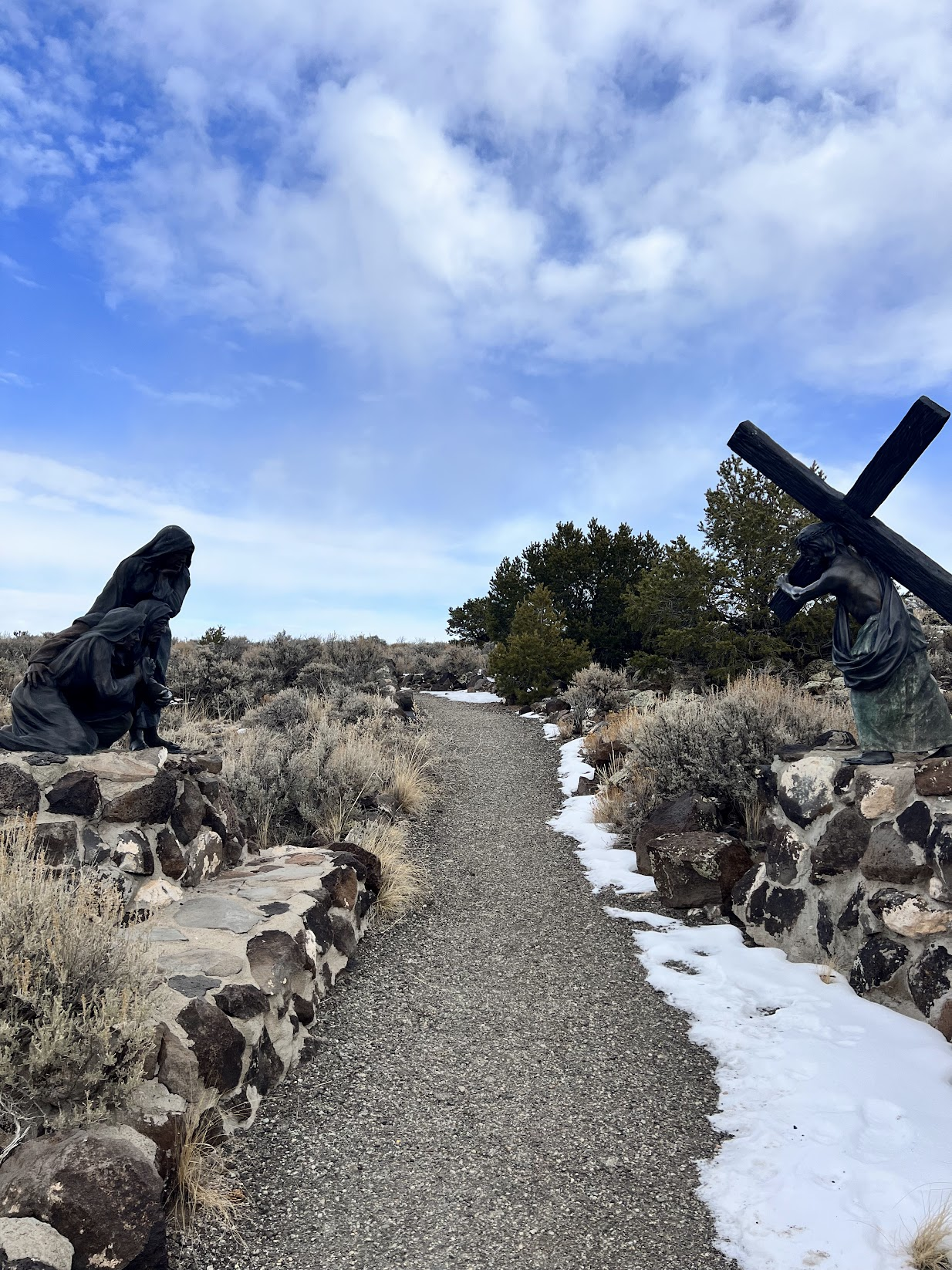
- But the Most Radical Thing he says is v27 – whoever does not bear his own cross and come after me, cannot be my disciple.
Think about that… How would they have heard that statement? In that day, they didn’t know Jesus was going to die on a cross and then when he did they didn’t understand the “why”.

But they knew, in the Roman World, that anyone condemned by the Romans for an awful crime or sedition – they were humiliated, stripped bare, forced to carry their cross of execution, then they were nailed on that cross in a public place for all to see.
Think about all of those definitions of what is NOT a disciple – The one who takes up the cross is all those things combined –
- all their worldly possessions were gone
- their family was of no value
- their taste was gone
- they were defeated
- they had no control
All of the OTHER statements are wrapped up in this one statement in v27 – Lay it all down and follow me
Are we “Tourists” – just came to see, take some pictures, get some souvenirs?
Are we “Commuters” heading somewhere else, but just traveling near Jesus?
Are we “Professional” Church folks?
Are we “Relocating”?
OR
Are we Disciples of Jesus Christ, laying everything else down to Follow, totaling humiliated, dead to everything else, counting the cost, and willing to bear it all to come after, that’s a Disciple, of Jesus?

“Our Lord never proclaimed a ‘Cause’; he proclaimed personal devotion to Himself.” – Oswald Chambers




-
Subscribe
Subscribed
Have a WordPress.com account? Log in now.

